Monday, 3 May 2021

The History of Yellow Journalism

Yellow journalism is such a common phase in history, that the average person probably does not know exactly what it means and what it is. As a society, we have come to realize that it was a practice that was not based in facts. 

Yellow journalism evolved in the late 19th century and it heavily relied on using sensationalism rather that clear cut facts. Relying on the public opinion can be a really beneficial and crucial thing for the government. 

The term "yellow journalism" originated out of a battle between Joseph Pulitzer's New York World and William Randolph Hearst's New York Journal.  Popular papers as they were, both of them were heavily accused of sensationalizing the news to drive up the circulation. 

The term came from a comic from Pulitzer's New York World called "Hogan's Alley," which showed a character dressed in yellow that was named "the yellow kid." 

Hearst copied Pulitzer and published a cartoon that was exactly like his. Hearst even hired the original cartoonist. This battle was crazy and sensational. The battle of the "yellow kids" led to this journalistic style to be coined as "yellow journalism."

The Yellow Kid 

Erwin Wardman, the editor of the New York Press was the first to publish the term "yellow journalism" to refer to news that is twisted into being more than just the facts. In 1898, an English magazine noted "All American journalism is not 'yellow', though all strictly 'up-to-date' yellow journalism is American." 

Yellow journalists helped sway the public opinion in favor of the United States and Spain in war in Cuba and the Philippines in 1898.

The World's article on The Main Explosion
 Journalist's Pulitzer and Hearst saw a golden opportunity in sensationalizing war. They published articles talking about a false plot to sink a United State's battleship, The Maine, which sank from an explosion.

Pulitzer and Hearst realized that they could drive their name into history by turning the public opinion in favor of war. Yellow journalism at the time had a massive unforeseeable impact. 

The war benefited the United States because the got ahold of overseas territory. This is why the Spanish-American war is often thought of as the first media war. So it is important to not underestimate the affect of journalism. 

I think that yellow journalism is not covered or talked about as much in the present day, because it is so common. I almost expect that everything I read will be false or sensationalized to a degree. 

There are infinite news sources and articles, so it makes sense that things would be written in hyperbole to grab the attention of the reader. 

It is important to realize that wars have been started due to false information feed to us by yellow journalists. 


Wednesday, 21 April 2021

The Legacy Henry Louis Mencken left behind

Henry Louis Mencken (1880-1956) was one of the most influential journalists of his time. Walter Lippmann coined Mencken as "the most powerful personal influence on this whole generation of educated people." 

Mencken grew up in Baltimore, Maryland where he attended a private school. His father was a successful businessman who ran a tobacco business. Mencken was expected to continue the business his father ran, however he ultimately choose a completely different path.  

Henry Louis Mencken 

Mencken attended Baltimore Polytechnic Institute where he graduated as valedictorian. His father wanted him to work in a factory or for his business. Mencken followed his father's wishes and worked in a factory until his father died. 

In 1899, he became a reporter for the Baltimore Morning and in 1906 he got hired by Baltimore Sun. He coedited The Smart Set from 1914 to 1923. It was a witty urban magazine that Mencken helped bring great success to. 

When he and George Jean Nathan edited it together, their circulation was around 40,000 to 50,000. That made the magazine one of the most far-reaching ventures of it's time. Mencken's work on The Smart Set paved the way for great writers such as F. Scott Fitzgerald and James Joyce. 

In 1924, Mencken and Nathan founded the American Mercury. It was aimed for the "civilized minority" and talked it blended politics, art, and science. It was the first magazine edited by white people to publish the works of African Americans. 

Mencken's Paper 

Mencken wrote elegant irreverent observations of America and it was very popular. The magazine's circulation took a hit after the stock market crash. Mencken left in 1933 after he sold the magazine. 

Mencken is still considered to this day as one of the best literary critics of the 20s. From 1919-1927 he wrote a series of six volumes of essays and reviews titles Prejudices. These essays were filled with satire that critiqued the critics. 

Mencken argued that instead of criticizing artists on their "righteousness" they should be criticized on their actual artistic merits. In his first volume, Mencken jeers at literary and cultural critics for demanding that the artist become a good role model instead of just being good reporters in human nature. 

Mencken kept making fun of organized religion, American business models and the middle class. He worked on trying to get recognition for newcomers in literature rather than the recognition going to "fraudulently successful writers." 

In the 40s, Mencken became slightly less popular because subjects such as the Great Depression were not fair game for his satire yet. People had been going through this terrible thing and he still kept his satirical nature and a lot of people were not welcome to it. 

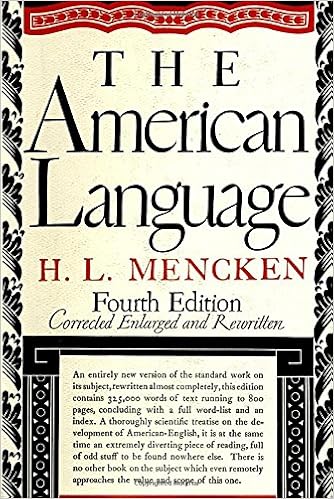
Another large contribution Mencken made was his publication in 1919 of The American Language. The volume was about language that was specifically American and not English. To this say it is ranked was one of the top 100 influential books in the United States. 


The book included American expressions and idioms and it instantly became a hit. Every year there was a new edition that came out and by the time Mencken was dead he was considered the leading authority of his own country's language.

Mencken's big belief was that he was a lover of liberty and he hated fraud of any kind. All of his writing and actions reflect that. 

Mencken believed that the Constitution and Bill of Rights were sacred documents that should absolutely be taken seriously. Mencken said that "I know of no other man who believes in liberty more than I do."

Mencken fought for equal liberties for all people, regardless of their skin color. He got death threats and people boycotted Baltimore goods for writing articles against lynching.  

He worked with the NAACP to promote the Costigan-Wagner Anti-Lynching Bill. He continued to fight for equality and wrote several articles against segregation. 

It was not just equality of races that Mencken promoted. When Franklin Roosevelt did not let Jewish refugees into the United States who were fleeing persecution from Nazis, he was the first journalist to denounce Roosevelt's action. 

Mencken's articles on the Scopes Monkey Trial was revolutionary. He was a fierce protector of the first amendment, so when a teacher was arrested for teaching students about the theory of evolution, Mencken wrote defending his actions. 


In addition to defending freedom of speech, Mencken also fiercely defended freedom of the press. He said that he believed that "a newspaper should tell the truth, however unpleasant." Gerald Johnson said that Mencken stood out because he had wit and honesty and courage. 

Public opinion of Mencken during the time he was alive is varied. Carl Van Vechten knew Mencken and wrote about him stating "his ebullience is boundless and even casual observation of any object or person stirs him to expression." 

People who knew Mencken personally and knew what he was trying to accomplish seemed to really like him and believe in him. 

Alfred A. Knopf wrote about how pleasant it was to work with Mencken in his piece written in the Yale University Library Gazette. Knopf said that Mencken was an absolute pleasure to work with and he never asked for a raise in royalties or demanded things before his work was done. 

However, he got criticized for his radical ideas. Whenever someone has unpopular ideas, they are bound to be criticized and Mencken got his fair share of death threats for standing up for people's rights.

An interesting journal article I came across was written by Charles Angoff titled Mencken Twilight. Angoff was "the best managing editor in America" according to Mencken. In his article, Angoff wrote that Mencken's "failure to attend an institution of higher learning gnawed at him his whole life." 

Angoff's jarring criticism of Mencken in this piece is raw and as real as it comes. Angoff said that "the trouble with Mencken as a literary critic was that he was so obviously not at home in criticism." The whole 17 page piece criticizes Mencken ruthlessly.

There is a plethora of things written about Mencken during the time he was alive and it is all contradictory. He was controversial and that led to a mass about of criticism but the people that knew him loved him. He is still to this day considered one of the best and most influential journalists. 


Thursday, 1 April 2021

What the World thought of Mary Ann Shadd

When I was doing my original EOTO research on Mary Ann Shadd, I was immediately impressed and inspired. This woman did so much for the time period she was in. She was a black woman who had everything stacked against her, yet she persevered and became the first African American woman to publish and edit a weekly newspaper. 

So why is there almost nothing written about her in that time period? When I was first searching the databases that were given to us in class, I could find no primary resources from the time Shadd was alive. The only primary sources I could find were ones from the last fifty years. 

This indicated to me the true importance of Shadd's life work. She knew the true values and morals that should have been instilled in everyone. She lived her life according to what she knew was right and never stopped her work according to what anyone else thought. 

The general public did not like that Shadd was outspoken. That is probably why her voice was silenced from the other papers. They did not like that she was trying to free black people and get them to move to a less oppressed place. Shadd also wrote under a pen name that would have made her unrecognizable by the general public. 

Through all of my searching, I was able to find one primary source from the time Mary Ann Shadd was alive. I found this source on Gale Primary Sources.  It was from the Liberator magazine that was based out of Boston, Massachusetts. The Liberator was William Loyd Garrison's daily newspaper and much like Shadd's paper, it wanted to end slavery. The article I found was published on Friday April 28th, 1854. 

The Liberator Magazine from April 28th, 1854

The article published about Shadd was about her newspaper, The Provincial Freeman. The short three paragraphs act as an informational blurb about the paper. It wishes the paper good luck because of its work to help Canada's colored people. 

It mentions a lot of names, before it briefly mentions Shadd at the end stating that "in the absence of Mr. Ward, who has not yet returned from his European mission, Miss Mary Ann Shadd acts as his pro tem." 

Basically, the article gives every major credit it can to everyone but Shadd, which is very disappointing. Now, we look back on The Provincial Freeman and the only name that pops up is Shadd. Nobody liked that she was an African American woman doing something that was not standard back in the day. 

Even though there are no primary sources that document it, I am sure that Shadd's involvement in the paper was controversial. Her paper was even shut down shortly after it opened, because it was so unpopular. The best way to punish someone for being controversial, is to just leave them out of history altogether. 

Shadd statue in Chatham, Canada

Another reason why I assume it is hard to find Mary Ann Shadd in primary sources, is because her paper only laster a little under ten years. She wrote in a time where it was easy to get hated, but hard to get true exposure for good work. She would have had to rely on other Black newspapers, who unfortunately were probably also sexist. 

I am surprised that I can't find any primary sources from the days that she spoke at the national black convention or from any other good work that she did. I have to assume that the world just wasn't ready for her. I also hope that I am just searching the wrong databases. I don't like that fact that Shadd did so much good in her life and yet there is almost nothing written about her during the time she lived. 

There are, however, a lot of primary sources from Shadd herself. From those, we can see just how special she was and her true vision for African American's across the globe. She was a helper, abolitionist, and a truly good person wanting to enact change. 

I am glad that history finally caught up and now a lot of people talk about how influential Shadd was and the good work she did helping people from all sectors of life. 


Tuesday, 2 March 2021

EOTO: PRESENTATIONS

 As much as I love researching my own EOTO person, I have a special place in my heart for presentation week. I was in quarantine during presentation week, so I couldn't hear that well. However, I was able to digest some very interesting information about journalism heroes that I never knew before.                                                                                                     

                                                                Britannica
Jane Cunningham Croly 

 Emma Ralls presented on Jane Cunningham Croly, an influential woman that I have unfortunately never heard of. She lived during the 1800s and decided to move to New York to pursue a career in journalism at age 25. 

She was rejected many times and when she was finally hired she had to write under a pseudonym. Croly is credited with creating the first woman's page in a newspaper. She also founded the Women's Press Club of New York and became the first president of it.

I am so inspired by someone that lived hundreds of years ago, it is insane. She was a woman in a true man's world just trying to do something she loved and she kept at it after being rejected many times. 

Even when she was hired, she couldn't reveal her true identity because it was dangerous. Learning about an influential journalist who was a woman inspires me to do better at whatever    I decide to do later down the road.                                                             

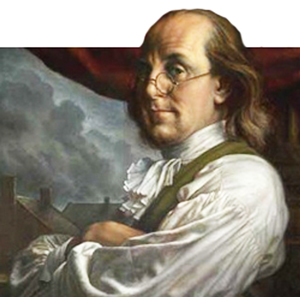
 Riley Manion presented on Benjamin Franklin. I did not think that facts about Benjamin Franklin could surprise me much, but boy I was wrong. 

I did not know that he was one of 17 children and that his education ended at the mere age of 10! That is insane to me, considering how he is still thought of as one of the smartest Americans to live. One of the main takeaways from Riley's presentation was that Franklin did a lot of different things in his life. He was an advocate for freedom, a journalist, scientist, and so much more.

 I think that as the years have gone on, we as a people have lost our imagination. We tend to only focus on one career, yet forget that the greatest people in history had many. I needed that reminder in class and Riley's presentation gave it to me. 

                                                   Baylor
Benjamin Franklin

I loved EOTO presentation week and learned a lot. I can't wait to read other student's blog posts on EOTO week and learn even more about great journalism heroes. 

EOTO: Mary Ann Shadd

 I always love EOTO week in Professor Smith's class. It gives everyone an opportunity to learn about new people and delve deeper into the world of journalism. This week, we had to pick a journalism hero from history and research them. I love a real strong women and I was instantly drawn to Mary Ann Shadd.  Shadd is a true North American hero in all the senses- she was brave, unapologetic, and influential. 

                                        Wikipedia 
Mary Ann Shadd

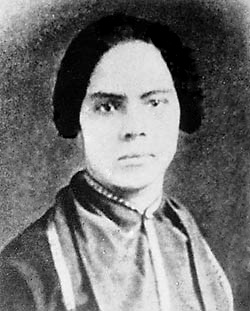
 Mary Ann Shadd was born on October 9th, 1823 as the eldest of 13 children to free parents in Wilmington, Delaware. Her family was involved in the Underground Railroad and helped numerous people flee northward to achieve freedom. Ever since she was born, Shadd had always been passionate about helping people and being a strong advocate for basic human rights. 

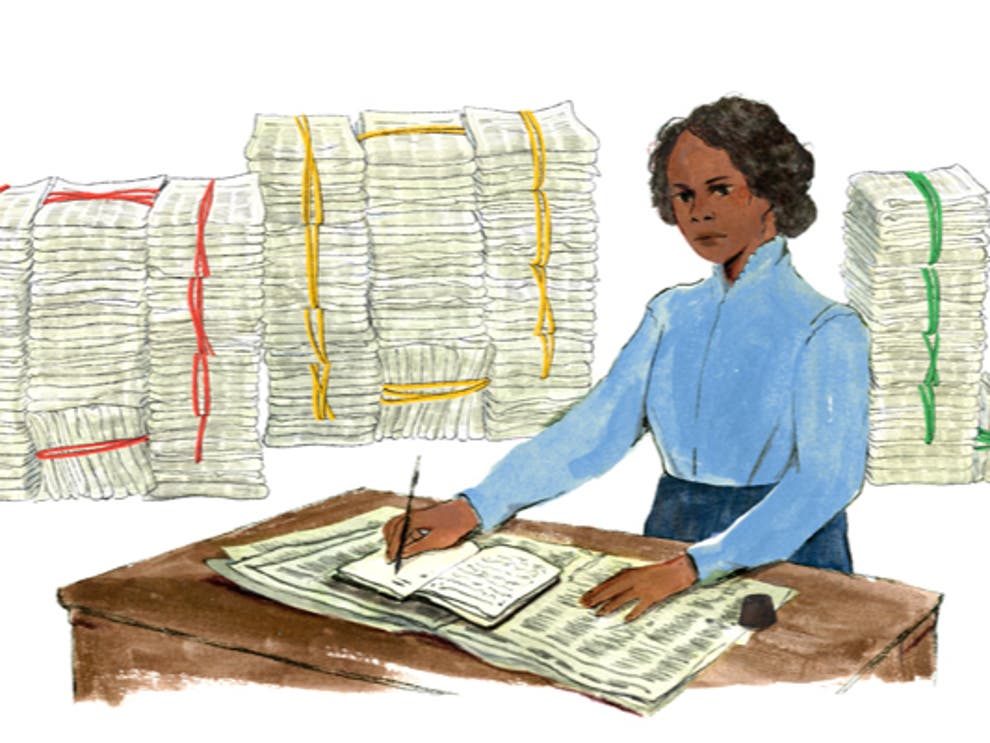
 In 1853, Shadd became the first black woman to publish and edit a weekly newspaper in all of North America. The paper was called The Provincial Freeman and it was devoted to displaced Americans living in Canada. Shadd focused her articles on successful black men and women living in Canada in an effort to convince people to migrate there. The paper's motto was "self-reliance is the true road to independence". The paper was published in Windsor, Toronto, and Chatham. Shadd never took credit for her work in the paper and her name was never listed. She knew people would be outraged if they learned a woman was behind the work in the paper. However, this viewpoint was increasingly unpopular at the time. People did not want to read anti-slavery sentiments and the paper lasted less than ten years before it went bankrupt and shut down. 

Copy of Shadd's paper 

After the paper shut down, Shadd went back to the United States during the Civil War. She was an amazing advocate for racial equality and never backed down from the fight. She was the first woman to attend and speak at the Philadelphia Colored Convention. She was unpopular when she first walked in, but her speech on emigration was so well-received that the convention gave her more time to speak. During the Civil War, Shadd worked in Indiana recruiting black men in the Union Army. 

 After the war was over, Shadd decided to be a teacher for a little while. She established and taught in schools in the United States and Canada. Some of the places she taught in were Washington D.C., Pennsylvania, New York, New Jersey, and West Chester. Access to education for all people was very important to her. 

                                                                        Google Images
    Mary Ann Shadd pictured above

Shadd never gave up on advocating for the people that needed her. She became the first black woman to enroll at Howard University Law School. She graduated alongside three other women and she was the only black woman of her graduating class. She set a very important precedent not only for black women, but for all women. Everyone, no matter their gender or race deserves to have an amazing education. 

 Shadd went on to fight for women's suffrage alongside Susan B. Anthony and Elizabeth Cady Stanton. She testified before Judiciary Committee of the House of Representatives and tried to register to vote. Although she was unsuccessful, it was a testament to her fierce advocacy. Shadd died in 1893 of stomach cancer, but her shining legacy as a journalist, abolitionist and advocate to those in need lives on. 


Thursday, 4 February 2021

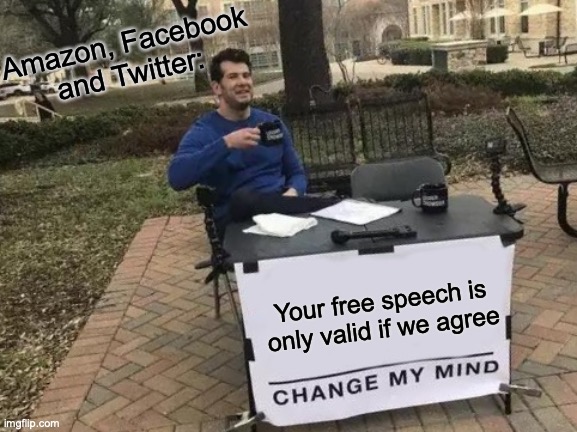
My Political Meme

Creating my own political meme in class was so much fun. At first, I didn't know what I wanted to do, because there were so many options. I was thinking about doing an actual cartoon, but my creative juices were not flowing in that department today. 

I get nervous when displaying my political voice so overtly that it makes me shut down. However, I think that the trick is to purely look at political situations through a journalistic viewpoint. This ensures that the work is honest. 

As a class we started looking at memes and I got super inspired. I wanted mine to be straight and to the point. Instead of making a meme about a historical event of the past, I decided to make one about what we are facing right now as a country. 

I used a meme generator website to make my meme. It is an amazing website for anyone wanting to make memes, but don't know how to make them from scratch. This website has multiple base images to choose from and plenty of examples to consult. 

 In class the last couple of weeks, we've been talking about free speech and the implications of big companies censoring citizens. The biggest culprits in this censorship have been Amazon, Facebook, and Twitter so I decided to put them all in my meme. 

My meme is pretty self explanatory and the overall message is that these big companies only allow the facade of free speech as long as it is to their advantage. I think it is pretty funny and a hard truth that everyone has to realize going forwards. Just because you only see one viewpoint on social media, that doesn't mean others don't exist. These billionaires have the power to silence so many people and they can get away with it.           


Censorship in the Mainstream Media

These are scary times to live through as a journalist or even just as an American citizen. We pride ourselves on being the land of the free and the first amendment. However, is this nation going down a dark path where freedom of speech is no longer a valued right? 

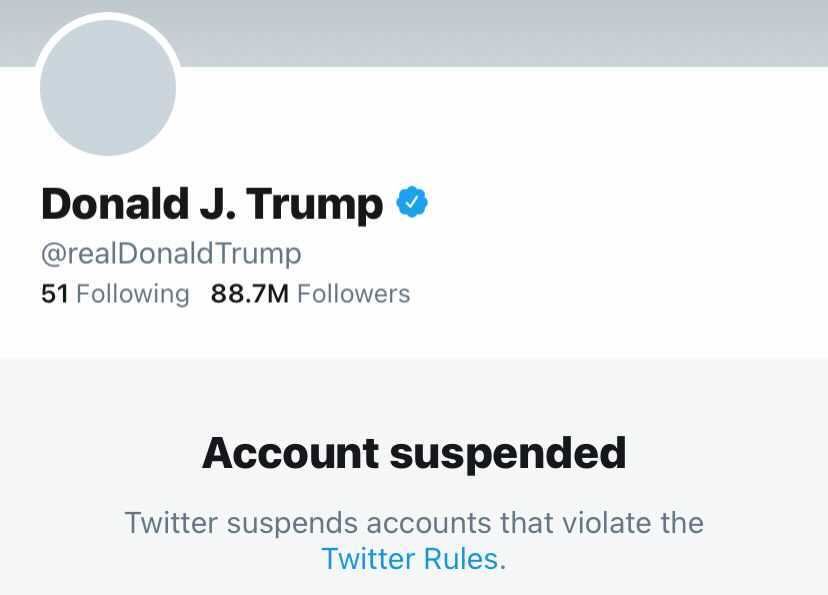
Just recently, Twitter banned President Trump from using their app. They completely dismantled his account and he was silenced from talking to the people of the United States. When Trump moved on to Parler, Amazon and the App Store took the steps to shut the app down completely. One can make the argument that Twitter and Amazon are private companies so they can do what they want. However, silencing the most powerful person in the country is a dangerous precedent to set. Essentially these businessmen are telling the world that they single-handedly have the power to influence politics and public opinion on any issue. Nobody should have this much power and use it to influence politics in this nation. There is a reason checks and balances are a thing in the government. It seems like there was a checks and balances law conveniently left out for these oligarchic businesses. 

The sad fact is that a lot of people consume their daily news from Social Media sites. How can anyone trust what is being said when it is a known fact that they censor opinions and viewpoints that they don't like or disagree with? They may have the advantage of controlling the political dialogue but they might be doing the country a greater disservice. People are smart enough to be weary of the information being thrown at them. Twitter and other companies have blatantly silenced the voices of so many people, censoring half the country. Citizens living in a free country hate nothing more than being silenced and fill fight to have their voices heard. What will happen when eventually, nobody trusts the mainstream media at all?

Image result for twitter banning trump

Upton Sinclair: The Pioneer of Muckraking

Muckraking is something that I personally have never heard of until this class. I knew it was a kind of a journalism, but I had completely ...